
How Design-Led Booth Planning Reduces Event Risk, Waste, and Last-Minute Changes
Exhibitions and events often fail not because of poor ideas, but because of unclear planning. Last-minute changes, rushed approvals, and on-site improvisation can quickly inflate costs, create unnecessary waste, and compromise brand quality.
As events become more complex and sustainability expectations increase, design-led booth planning is emerging as a practical way to reduce risk while improving outcomes.
This article explores how a structured, design-first approach can help organisations execute exhibitions more confidently and responsibly.
Why Event Risk Often Starts at the Design Stage
Many exhibition issues originate early — long before fabrication or setup begins.
Common causes include:
-
Vague design direction or brand guidelines
-
Misalignment between stakeholders
-
Limited visual clarity before production
-
Over-reliance on on-site adjustments
When these gaps surface late in the process, they often result in reprints, material wastage, and compromised booth presentation.
The Role of Design-Led Planning
Design-led planning shifts decision-making upstream, allowing teams to resolve uncertainty before production begins.
This approach focuses on:
-
Translating brand objectives into spatial design
-
Defining layout, messaging, and user flow early
-
Evaluating materials and systems before commitment
-
Reducing assumptions during fabrication and installation
At ModularOne, this philosophy is applied through structured design consultations, ensuring booth concepts are aligned with both brand intent and practical execution constraints.
How Pre-Fabrication 3D Visuals Improve Certainty
One of the most effective ways to reduce last-minute changes is through pre-fabrication 3D visualisation.
When teams can clearly see:
-
Layout proportions
-
Graphic placement
-
Material finishes
-
Lighting and sightlines
They are better equipped to make informed decisions early.
ModularOne incorporates 3D visuals into its planning workflow to help clients validate designs before production, reducing the likelihood of rework and unnecessary material disposal.
Design Clarity and Its Impact on Sustainability
Design clarity doesn’t just improve aesthetics — it directly affects sustainability outcomes.
Well-planned booths tend to:
-
Use fewer materials overall
-
Avoid excessive print revisions
-
Minimise on-site modification
-
Support cleaner installation processes
For organisations with CSR or ESG considerations, this planning discipline helps ensure sustainability goals are embedded into execution rather than addressed after the fact.
Why Modular Systems Complement Design-Led Planning
Modular booth systems are particularly well-suited to design-led workflows because they are:
-
Pre-engineered and dimensionally consistent
-
Easily visualised in advance
-
Designed for reuse and reconfiguration
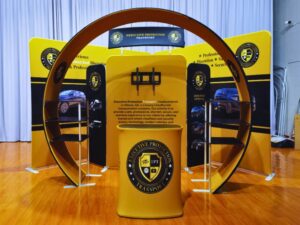
At ModularOne, modular aluminium frames and tension fabric systems are integrated into the design process from the start, enabling predictable outcomes while maintaining flexibility for different event layouts.
What Organisations Should Consider Moving Forward
Before the next exhibition, teams may find it useful to ask:
-
Have design decisions been clearly visualised before production?
-
Is the booth system aligned with sustainability goals?
-
Are materials and layouts optimised for reuse?
-
Can last-minute changes be minimised through better planning?
Design-led planning helps shift exhibitions from reactive execution to controlled, intentional delivery.
Planning an exhibition that needs to deliver both brand impact and sustainability accountability?
👉 Visit https://modularone.com.sg
👉 Speak to ModularOne for a design consultation
👉 Explore how modular systems can support your ESG objectives